Festival countdowns & local muhurat times.
Navratri 2026 starts on Sunday 11 October, and Dussehra follows on Tuesday 20 October. Diwali 2026 is on Sunday 8 November, with Lakshmi Puja at 5:54–7:50 PM in Delhi. Every countdown is below, and the puja pages give sunrise, sunset and Choghadiya for your city.
Next up: Navratri · Sunday 11 October
Puja dates and muhurat times last checked against Drik Ganit panchang on 17 September 2026.
Featured this season
Diwali
A little light. A lot to look forward to.

More reasons to celebrate
All 19 festivals · Soonest first

Navratri
Nine nights of Durga, closing on Dussehra.
Ghatasthapana muhurat · 6:19–10:12 AM (New Delhi)
Dates & festival guideDurga Ashtami
Sandhi Puja timings and Kanya Puja planning.
Sandhi Puja · 10:27–11:15 AM IST
Dates & festival guideMaha Navami
19 October by the northern rule; 20 October in Bengal.
Northern-rule date countdown · midnight IST
Dates & festival guide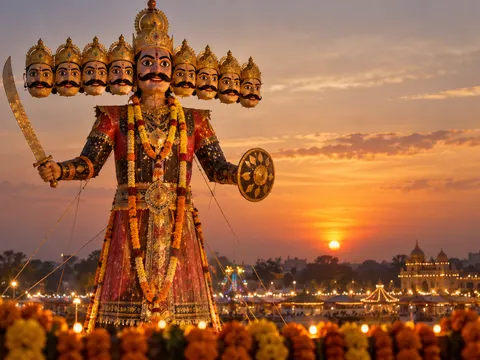
Dussehra
Ravana Dahan on the 20th, Bengal's immersions on the 21st.
Vijay Muhurat · 1:59–2:45 PM (New Delhi)
Dates & festival guideKojagari Lakshmi Puja
The October full-moon puja, separate from Diwali.
Delhi Nishita · 11:40 PM–12:31 AM IST
Dates & festival guide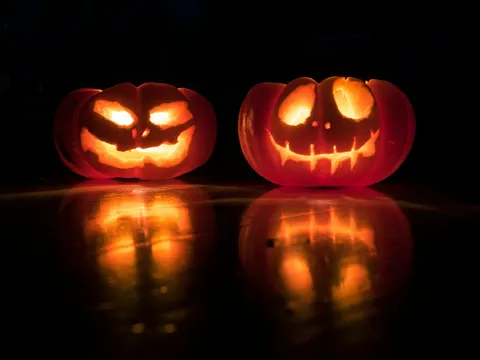
Halloween
Live countdown to trick-or-treat night, plus the date every year to 2030.
Peak trick-or-treat window · 5:30–8:00 PM local
Dates & festival guideDhanteras
Puja times by city, and a practical shopping plan.
Delhi puja · 6:02–7:57 PM IST
Dates & festival guide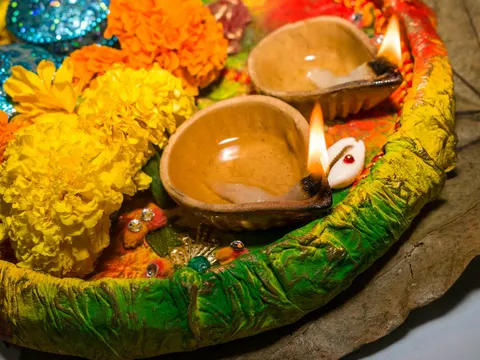
Diwali
All five days, and why it's the 8th, not the 9th.
Lakshmi Puja muhurat · 5:54–7:50 PM (New Delhi)
Dates & festival guide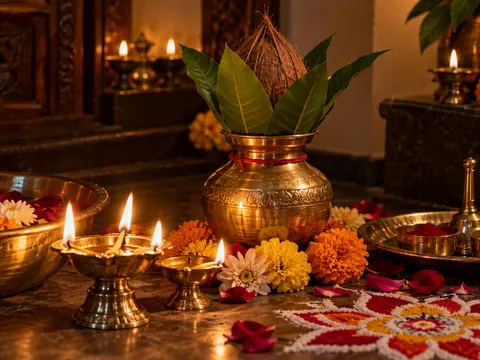
Lakshmi Puja
The Diwali-night puja, plus Kojagari and Gaja Lakshmi dates.
Lakshmi Puja muhurat · 5:54–7:50 PM (New Delhi)
Dates & festival guide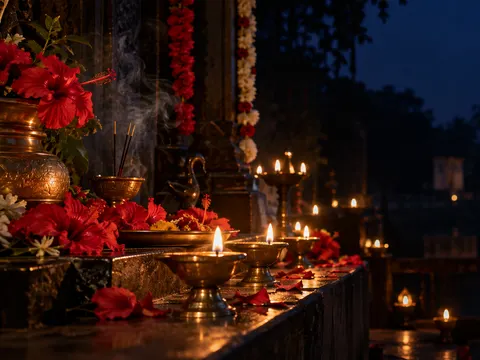
Kali Puja
Bengal's Diwali-night Shyama Puja, counted to the Nishita window.
Nishita Kaal · 11:39 PM–12:31 AM (New Delhi)
Dates & festival guideChoti Diwali
Why Naraka Chaturdashi and Diwali share a date.
Date countdown · midnight IST
Dates & festival guideGovardhan Puja
10 November in Delhi; 9 November in Mumbai.
Delhi puja · 6:40–8:50 AM IST
Dates & festival guideBhai Dooj
Tilak timing, the thali and a family visit plan.
Delhi tilak · approximately 1:10–3:20 PM IST
Dates & festival guide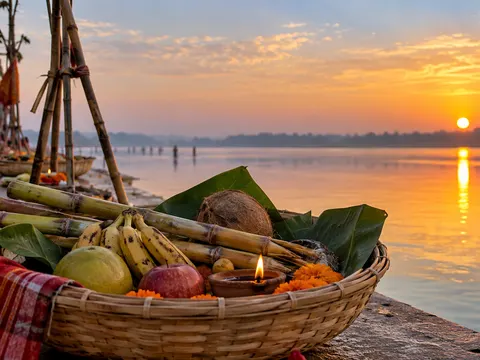
Chhath Puja
Four days of Surya worship, counted to the Sandhya Arghya.
Sandhya Arghya at sunset · 5:28 PM (New Delhi)
Dates & festival guide
Christmas
Live countdown to Christmas Day, plus the date and what falls around it.
Christmas Day · from midnight your local time
Dates & festival guide
New Year
Live countdown to midnight, plus New Year's Day every year to 2031.
Midnight · your local time
Dates & festival guide
Chinese New Year
The Year of the Goat, and why Korea's Seollal is a day later.
Lunar New Year's Day · from midnight your local time
Dates & festival guide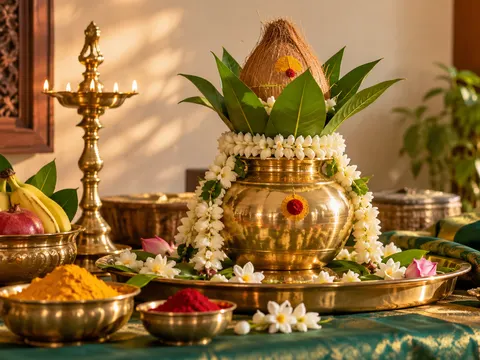
Varalakshmi Vratham
South India's Friday Lakshmi vratam, with all four lagna windows.
Simha Lagna · 6:12–8:29 AM (New Delhi)
Dates & festival guide
Raksha Bandhan
No Bhadra in 2027, just a hard stop at 12:58 PM.
Shubh muhurat to tie rakhi · 5:51 AM–12:58 PM (New Delhi)
Dates & festival guide


How the pages work
Live countdowns
When a festival has a muhurat, the countdown runs to the start of that window.
Timings for your city
Sunrise, sunset, Pradosh Kaal and the full Choghadiya for 32 cities. The page remembers the one you pick.
Plain-language answers
Terms like Pradosh Kaal and Bhadra get a one-line explanation on the page that uses them.
Free festival countdowns with a muhurat calculator
festcountdown answers two questions for each festival: when is it, and what time should the puja start? There are 19 festivals on the site. Each one has a single page, and everything about that festival lives on it.
Which other festivals are coming up?
On Dussehra 2026, the Vijay Muhurat is 1:59–2:45 PM in Delhi. Kojagari Lakshmi Puja comes five days later, on Sunday 25 October. Diwali's five days run from Dhanteras on Friday 6 November to Bhai Dooj on Wednesday 11 November. Kali Puja falls on the same night as Lakshmi Puja, with Nishita Kaal at 11:39 PM–12:31 AM in Delhi. Chhath Puja 2026 runs 13–16 November. Its Sandhya Arghya is at sunset on Sunday 15 November, which is 5:28 PM in Delhi and 5:01 PM in Patna.
Halloween lands on a Saturday this year, so there is no school the next morning. Christmas is Friday 25 December. That's a three-day weekend in India and the US, and four days in the UK. New Year's Day 2027 is a Friday too. Chinese New Year 2027 is Saturday 6 February, the start of the Year of the Goat. Raksha Bandhan 2027 is Tuesday 17 August. There's no Bhadra Kaal that morning, so in Delhi you can tie rakhi any time from 5:51 AM to 12:58 PM. Varalakshmi Vratham comes four days earlier, on Friday 13 August.
Why the muhurat changes with your city
Every muhurat is tied to local sunrise or sunset. A Lakshmi Puja time printed for Delhi is off by half an hour or more in Mumbai or Kolkata. In London or New York you need a different time altogether. Pick your city in the calculator and the sunrise, sunset, Pradosh Kaal and all 16 Choghadiya slots update straight away, without reloading the page.
Seven pages have the calculator: Navratri, Dussehra, Diwali, Lakshmi Puja, Chhath Puja, Varalakshmi Vratham and Raksha Bandhan. A few windows, such as Vrishabha Kaal on Diwali, can't be worked out reliably for every city. For those we give the New Delhi time and label it.
What's on each festival page
The Diwali 2026 page covers all five days, why the date moves each year and the Lakshmi Puja muhurat and Choghadiya breakdown. It also has copy-ready wishes, gift ideas by budget and an FAQ. Lakshmi Puja sorts out the three pujas that share the name, Kojagari included. Kali Puja explains why Bengal worships Kali at midnight while others do Lakshmi Puja.
Navratri lists the goddess for each day and the Sandhi Puja timing. Dussehra has the Vijay Muhurat and the reason some calendars print 21 October. Chhath Puja gives the arghya times for your city and explains the 36-hour fast. Varalakshmi Vratham sets out its four lagna windows. Raksha Bandhan covers Bhadra Kaal, the thread-tying ritual and rakhi wishes to send.
Halloween has trick-or-treat hours, costume ideas, how much candy to buy and safety basics. Christmas tells you what's open on Christmas Eve and why some countries celebrate on 7 January. New Year shows when midnight reaches 12 cities, in IST. Chinese New Year covers how China, Vietnam, Korea and Singapore celebrate, and why the date moves.
Everything is free, and there's nothing to sign up for. If a date or time looks wrong, email us with your city and your source, and we'll check it.